




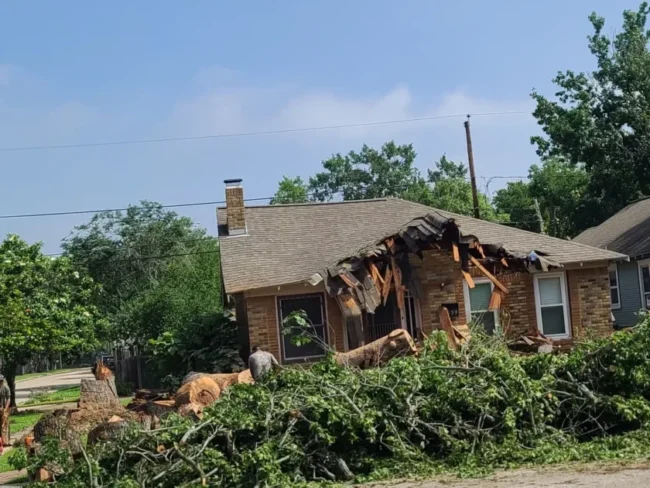
First 24 Hours: Safety, Photos, and Temporary Protection
Stay safe first. If you suspect structural damage, downed power lines, or active leaks near electrical fixtures, keep people and pets away from the area and shut off breakers feeding affected rooms. Avoid climbing on the roof wet shingles, mossy decking, or hidden soft spots are a recipe for slips and further damage.
Document from the ground. Walk the property line and shoot wide and close-up photos: missing or lifted shingles, exposed underlayment, dents on metal flashings, bruised shingles (granules knocked off), and debris impact points on gutters, downspouts, garage doors, and AC units. Photograph fences and mailboxes too hail dents there help corroborate roof damage.
Spot wind vs. hail from the ground.
- Wind damage: displaced or creased shingles, tabs flapping, ridge caps missing, debris patterns all pointing one direction.
- Hail damage: circular dents on gutters, soft “bruises” on shingles where granules are crushed, splatter marks on patios, window screens peppered.
Protect what you can safely. If water is intruding, place buckets, move furniture, and cover valuables. Temporary tarping is appropriate when you can see missing shingles or punctures; the safest route is to have a pro install a tarp with proper anchor boards, underlayment, and edge sealing so you don’t void warranties or create nail holes that become leaks later.
Call a local roofer quickly. In Houston/Katy storms, calendars fill fast. A same-day/next-day inspection helps you: (1) prevent secondary damage, (2) collect pro-level documentation for insurance, and (3) get guidance on whether a claim is worthwhile.
Should You Call Insurance or a Roofer First?
There’s no single right answer, but here’s a practical way to decide:
- Call a roofer first when you’re unsure it meets claim thresholds. A reputable local contractor will inspect, document, and estimate. If the damage is minor or below your deductible, you’ll avoid an unnecessary claim on your record.
- Call insurance first when there’s obvious, widespread storm impact (whole sections missing, multiple leaks, neighborhood-wide hail reports). Open a claim, get a claim number, and invite your roofer to attend the adjuster meeting.
Why have your roofer at the adjuster appointment? They point out less obvious damages (ridge, flashing, vents, soft decking), ensure the scope includes code-required items, and help answer technical questions. This reduces supplements, delays, and back-and-forth later.
Texas tip: Keep a log dates, names, phone numbers, and what was said. Pair your photo folder with the roofer’s inspection report to streamline the adjuster’s assessment.
Insurance Basics You Must Know (ACV vs. RCV, Deductible, Depreciation)
Key terms in plain English:
- Deductible: your out-of-pocket portion by law, a contractor shouldn’t “waive” it.
- ACV (Actual Cash Value): what the roof is worth today after age/depreciation.
- RCV (Replacement Cost Value): what it costs to replace with like kind/quality.
How payouts usually flow (RCV policy):
- Insurer issues ACV payment first:
RCV − Depreciation − Deductible. - After the work is completed and documented, recoverable depreciation is released, bringing you up to RCV (you still pay your deductible).
Simple example (illustrative):
- Approved RCV: $18,000
- Depreciation: $4,000
- Deductible: $2,000
- Initial ACV check: $18,000 − $4,000 − $2,000 = $12,000
- Final depreciation release (after completion): $4,000
- Your total out-of-pocket: $2,000 (the deductible)
If you have ACV-only coverage: there is no depreciation release. You’d receive RCV − Depreciation − Deductible and pay the rest yourself. Knowing which policy you have changes the strategy your roofer can help align scope and materials to the budget reality.
Your Storm-Damage Roof Inspection: What a Pro Checks
A thorough inspection covers:
- Shingles/tiles/metal panels: missing tabs, creases, bruises, impact fractures, lifted seams, exposed fasteners.
- Penetrations & flashings: pipe boots, chimney, skylights common leak sources when wind drives rain sideways.
- Ridges/hips & valleys: high-stress zones where wind strips caps or hail fractures laminations.
- Gutters & downspouts: hail splatter, seam separation, hanger failure; water management affects interiors.
- Decking & attic: soft spots, nail pulls, water staining, insulation dampness, daylight where it shouldn’t be.
Repair vs. replacement decision:
- Repair fits small, isolated issues (a few shingles, one flashing) with sound surrounding material.
- Replacement is best when damage is widespread, the roof is near end-of-life, or matching is impossible (color lots discontinued), or code upgrades are triggered. Your contractor should give you a photo-rich report, a line-item scope, and clear timelines.
Avoid Storm Chasers: How to Vet a Roofing Contractor
After big Texas storms, out-of-town teams knock on doors. Protect yourself:
- Local presence: physical address in Houston/Katy and proof of years operating locally.
- References & recent jobs: ask for addresses you can drive by.
- Insurance & credentials: general liability, workers comp, and manufacturer programs (helps with warranty eligibility).
- Clear contract & scope: materials (brand/line), ventilation plan, underlayment type, flashing details, and disposal/cleanup.
- No deductible games: it’s illegal to rebate or eat your deductible.
- Communication: dedicated project manager, daily updates, photos before/during/after.
Red flags: high-pressure sign-now tactics, vague estimates, refusing to share insurance certs, and promises to “handle your claim” in ways that edge into public adjusting (which requires a license).
Houston/Katy Action Plan with Rhino-Vations
24/7 emergency response: If water is coming in, we prioritize same-day tarping and interior protection to stop secondary damage.
Next-day roof inspections: A technician documents wind/hail impact with photos and a clear scope what must be done now, what can wait, and whether a claim makes sense.
Insurance support (not a public adjuster): We’ll share photo reports and meet your adjuster to make sure legitimate damages are noted. We stay within contractor roles no claim handling or coverage promises but we do help you present accurate, jobsite-grounded facts.
Repair, replacement, maintenance: Whether it’s targeted repairs, full replacement with code-compliant ventilation/flashings, or a maintenance plan to extend life, we give options with transparent pricing and timelines tailored to Houston weather cycles.
FAQs: Timelines, Costs, and What If Insurance Denies the Claim?
Within 24–48 hours: document, contain water, schedule an inspection, and if recommended install a professional tarp. Fast action lowers interior damage and strengthens your insurance file.
Storm (catastrophic) claims may affect regions, not just you individually. Ask your agent; your roofer can help you decide if damage likely exceeds the deductible.
Ask your roofer to provide specific functional-damage evidence (e.g., fractured mats, compromised seals). If needed, request a re-inspection with your contractor present.
Typical single-family homes: 1–2 days once scheduled, weather permitting. Lead time varies with storm volume and material selection.
Options include a contractor-attended re-inspection, supplementary documentation, or an independent evaluation. Your roofer should stay in the contractor lane while helping you keep the facts organized.
Quick 24–48 Hour Checklist
Conclutions
Storm damage is stressful, but a clear plan keeps you in control: protect first, document well, get a local pro’s inspection, and align insurance steps with a solid scope. In Houston/Katy, Rhino-Vations focuses on fast stabilization, thorough documentation, and right-sized solutions from small repairs to full replacements that stand up to Gulf weather.