




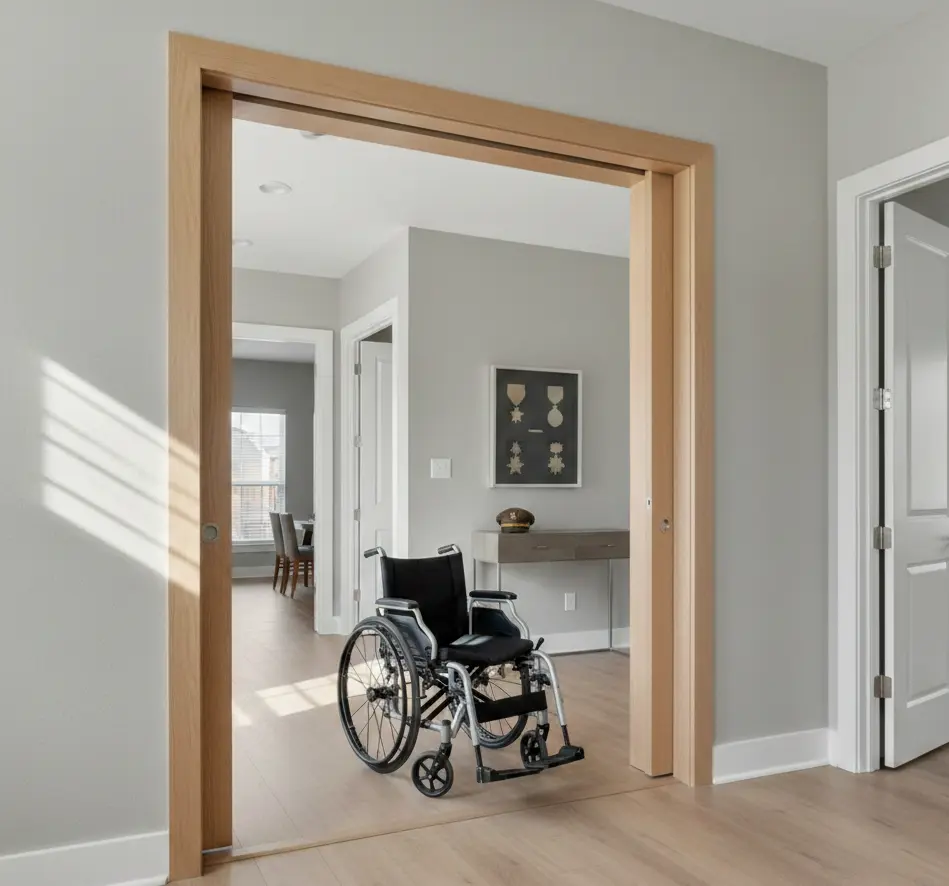
If you’re searching “widening doorways cost” you’re probably not asking out of curiosity. You want a real number so you can plan, compare quotes, and figure out whether you’re looking at a quick door swap… or a full-on opening modification.
And here’s the honest truth (the one that saves you hours): “Widening a doorway” can mean three totally different jobs and the price changes a lot depending on which one you actually need.
The real question: are you replacing a door, replacing a frame, or widening the opening?
Before we talk numbers, let’s define the job. In my day-to-day conversations with homeowners and veterans around Greater Houston, most people say “door widening” when they really mean one of these:
Door replacement cost (what you’re actually paying for)
This is the simplest scenario: the opening stays the same width, and you replace the door slab and maybe hardware. If the door is beat up, heavy, or hard to use, this can help but it won’t fix a narrow opening for a wheelchair.
Door frame (jamb) replacement cost vs. full opening modification
A door frame replacement (jamb + casing/trim work) becomes relevant when the frame is damaged, rotted, out of square, or you’re changing door size within the same rough opening. People often Google:
- door frame replacement cost
- cost to replace door frame
- how much to replace door frame
Those keywords usually signal: “I know something around the frame is the problem, but I’m not sure how deep this goes.”
When “widening a doorway” becomes structural work
This is the true widening project: you’re changing the rough opening. That can include reframing studs, updating the header, then redoing drywall, texture, trim, and paint to make it look like it was always that way.
In my experience, this is where budgets get surprised because the “doorway” isn’t just a door. It’s framing + finishes.
Typical cost to widen a doorway for wheelchair access in Houston
Alright numbers.
In the Houston area, you’ll usually see widening an interior doorway land somewhere in these ranges per doorway, depending on wall type and finish level:
- Simple widening in a non-load-bearing wall: often $900–$2,500
- More involved widening with heavier finish work (matching texture/trim/paint,
- flooring transitions): often $2,000–$4,500
- Load-bearing wall widening (structural reframing, header work, more inspection/permit complexity): often $3,500–$7,500+
Those are practical quoting ranges not internet “perfect world” numbers. And in my experience, the biggest swing factor is not the door. It’s what we have to rebuild around it to keep things safe and clean-looking.
Non-load-bearing widening: what’s included
Typically:
- Remove existing frame/trim
- Reframe the opening wider
- Install the new door + frame
- Patch drywall, re-texture if needed
- Reinstall/replace casing and repaint the repaired areas
Load-bearing widening: why it jumps
If the wall carries load, the scope may include:
- Temporary support during reframing
- Proper header sizing and structural framing details
- Potential permit/inspection steps
- More finish repair because the work area grows
Finish work that quietly adds up
Houston homes often have wall textures that are tricky to blend. Add baseboards, casing profiles, paint matching, and flooring edges, and suddenly your “one doorway” affects a bigger visual area. In my experience, this is exactly why two “same size” widening jobs can be priced very differently.
Cost factors that change your price fast
Here’s what moves your quote up or down quickly:
Target width (32 vs 34 vs 36 inches)
Wheelchair access commonly aims for wider clear opening and easier maneuvering. The wider you go, the more likely you trigger additional framing and finish work especially in bathrooms where space is tight.
Bathroom vs bedroom vs exterior doors
- Bathrooms: often the most expensive per doorway because tight corners mean extra rework, and finishes (tile, vanity clearance, thresholds) complicate things.
- Bedrooms/halls: usually more straightforward if the wall is non-load-bearing.
- Exterior doors: often a different category entirely (weatherproofing, thresholds, possible brick/stucco work, security hardware).
Pocket doors and other alternatives
Sometimes a pocket door or other layout change solves access without widening as much but it’s not always cheaper. In my experience, pocket doors can be a win when swing clearance is the real issue, but they can also require opening up a long section of wall, which adds labor and drywall finishing.
A quick pricing checklist to get an accurate quote
If you want a quote that doesn’t “mysteriously” grow later, gather these before you call:
Measurements to take
- Current door width (door slab size)
- Rough opening width (if you can measure)
- Wall thickness
- Nearby obstacles (light switches, outlets, vents)
- Bathroom clearance issues (toilet/vanity proximity)
Photos to send your contractor
- Full wall view (shows if it might be load-bearing)
- Both sides of the doorway
- Floor area (shows transitions tile to wood, etc.)
- Any cracking/settling around the opening (helps planning)
In my experience, when a homeowner sends clear photos and measurements upfront, quotes get tighter, timelines get clearer, and surprises drop dramatically.
Can the VA cover widened doorways? (HISA / SAH / related programs)
This is the part many veterans miss: if the doorway widening is tied to a service-connected medical need, there may be VA-backed funding routes depending on eligibility and program specifics.
VA’s disability housing grant ecosystem includes programs like Specially Adapted Housing (SAH) and Special Home Adaptation (SHA), which are designed to help eligible veterans modify a home for disability-related access needs.
And on the Rhinovations side, VA-focused adaptations are a core service category we’re used to building modifications like widened doorways and accessibility upgrades as part of a larger mobility plan.
What the process usually looks like (from our side)
Rhinovations describes a structured workflow that includes:
- Initial consultation (assess the home + needs)
- Proposal creation with a plan aligned to VA requirements
- Document approval steps before construction begins
In my experience, veterans get the best results when the project is scoped clearly from day one: which doorways, target widths, and what “finish level” you want (basic functional vs seamless cosmetic match).
Important note: eligibility and coverage depend on the program and your situation. The goal of this article is to help you estimate costs and ask the right questions not to replace VA guidance.
Why Rhinovations for veteran accessibility remodeling in Greater Houston
Rhinovations is based in the Greater Houston area (Katy office) and positions itself as both a construction provider and VA home adaptation specialist.
What that means in plain English: we’re not just thinking “can we widen the opening?” We’re thinking:
- Will it support long-term mobility and safety?
- Can we document the scope cleanly?
- Can we build it to last, with the right materials and workmanship standards?
If you want to talk through your door widths, layout constraints, and whether you’re closer to a door replacement, door frame replacement, or full doorway widening, Rhinovations can be reached at (281) 698-0843.
In my experience, a 10-minute call with photos and rough measurements is usually enough to tell you which price bracket you’re realistically in.
FAQs
Many homeowners aim for a wider, easier-to-navigate opening. The “right” target depends on your chair, your turning needs, and room layout (especially bathrooms).
No. If the wall isn’t load-bearing, widening is typically simpler. Load-bearing walls often increase complexity and cost.
Most of the time, widening the rough opening costs more because it adds reframing and finish repair. A door frame replacement can still be significant if trim/paint/repairs are involved.
Many single-doorway projects can be completed quickly, but finish matching (texture/paint) can extend the timeline depending on curing and scheduling.
Conclusions
If you’re in Houston and researching widening doorways for wheelchair cost, don’t let generic pricing lists steer you wrong. First, identify whether you need (1) door replacement, (2) door frame replacement, or (3) widening the rough opening. Then you can price it accurately and if you’re a veteran, you can explore whether VA housing adaptation programs may help cover eligible modifications.