




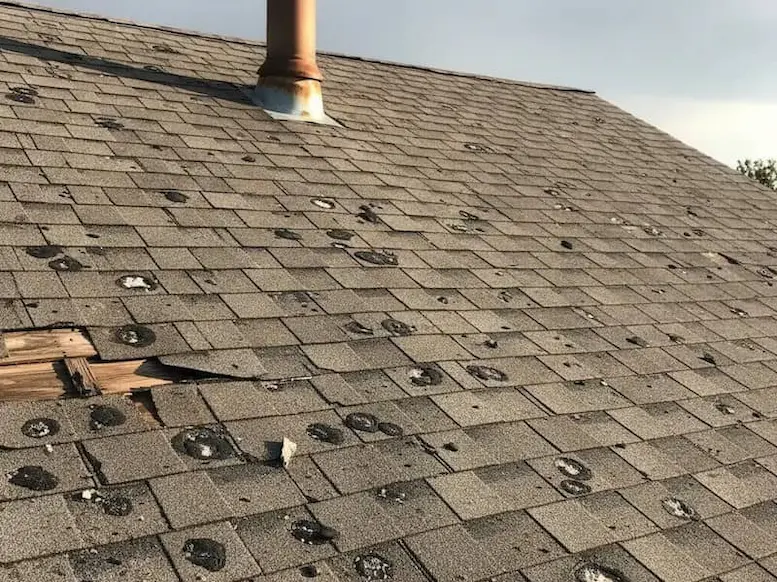
When a hailstorm blows through Houston, the first question we hear is: “Do I just repair a few shingles, or is this enough damage to replace the whole roof?” Here’s the straight answer from our day-to-day work at Rhinovations in Greater Houston/Katy: a full replacement typically makes sense when hail causes functional damage across multiple roof areas not just cosmetic marks and especially when that damage compromises the shingle or membrane’s ability to shed water.
We’ll break down what adjusters look for, practical thresholds we see in the field, how repair vs. replacement plays out on different roof types, what costs to expect in 2025, what insurance usually covers, and the exact steps to take after a storm.
The Short Answer: When Hail Damage Triggers a Full Roof Replacement
Think “functional + widespread.” Hail can bruise the mat under the granules, crack edges, expose underlayment, loosen seals, and shorten a roof’s service life. Replacement typically becomes the right call when you have:
- Multiple slopes (sides of the roof) with functional damage bruising you can feel, fractured mats, torn tabs, displaced granules exposing asphalt, or impact punctures on membranes.
- Active leaks or clear pathways to leaks, like exposed underlayment, damaged flashing, split ridge/hip shingles, or compromised penetrations (vents, stacks).
- Soft metal components (vents, gutters, drip edge) showing hail strikes and nearby shingles with functional hits these metals help corroborate storm direction and severity.
- Repair impracticality: if the damage is spread out, “chasing” spot repairs can leave a patchwork roof that doesn’t seal or age uniformly.
From our Houston inspections, we often see wind-driven hail mark one or two slopes more severely. If we confirm functional hits in multiple test areas and the pattern isn’t isolated, that’s when replacement discussions get serious.
How Pros and Adjusters Measure Hail Damage (Test Squares, Slopes, and Photos)
Test squares. A common method is chalking off 10’×10′ squares on several slopes and documenting functional hits within each square. While every carrier and policy is different, many field guidelines look for a consistent pattern of functional impacts (not just scuffs) across multiple squares and slopes.
Slopes matter. North vs. south, windward vs. leeward Houston storms are rarely uniform. That’s why we inspect each slope, valleys, ridges, and penetrations individually.
Documentation is everything. At Rhinovations we:
- Photograph close-ups in good lighting to show bruising, granule displacement, and cracks.
- Capture context shots (entire slope/section) to show distribution.
- Include soft metal hits to support directionality and storm intensity.
- Map leak points (ceiling stains, attic sheathing, decking) when applicable.
What about “how many hits per square”? There isn’t a single national number that applies to every policy. As a rule of thumb, we see adjusters take notice when functional hits in multiple test squares show a repeatable pattern across more than one slope that’s a stronger case for replacement than an isolated patch with a few marks. When damage is borderline, we explain how aging + hail accelerate failure and why a full system replacement (shingles, underlayment, flashing) can be the long-term fix.
Repair vs. Replace: Practical Thresholds for Asphalt, Metal, and Flat Roofs
Asphalt shingles (most Houston homes)
- Repair makes sense when functional damage is isolated for example, a corner or single plane with a handful of bruised tabs and no leaks.
- Replace becomes smarter when multiple slopes show bruising/fractures, or granule loss is heavy enough to expose asphalt and shorten service life. Sealing and color-matching patches can be tricky; widespread patching often looks uneven and ages poorly.
Metal roofs
- Cosmetic dents on panels may not equal functional damage. The question is whether impacts compromise seams, fasteners, or coating. If hail deforms panels or seams enough to risk water intrusion or damages numerous panels replacement (or panel sections) can be warranted.
- Many Houston owners choose impact-resistant systems or thicker gauges after a loss to reduce future risk.
Flat roofs (TPO, PVC, modified bitumen)
- Look for punctures, membrane fractures, seam damage, and ponding issues.
- If hail has compromised the membrane in multiple areas or seams are failing, a full replacement (or overlay where code and conditions allow) often beats chasing leaks for years.
Real-world tip from our crews: if we can’t restore system integrity (not just appearance) without leaving a patchwork, we recommend replacement. Long-term watertightness beats short-term savings.
Costs You Can Expect in 2025 (Houston vs. National Averages)
Every roof is unique, but homeowners typically ask for ballparks. In our market, material choice, roof size/pitch, layers, decking condition, and code requirements swing the numbers most. Here’s how to think about it:
- Every roof is unique, but homeowners typically ask for ballparks. In our market, material choice, roof size/pitch, layers, decking condition, and code requirements swing the numbers most. Here’s how to think about it:
- Full replacements: asphalt shingle systems remain the most budget-friendly; premium shingles, metal, or tile trend higher.
- Houston specifics: after severe hail events, labor and materials can fluctuate with demand. We always provide a written estimate and explain code-required line items (underlayment, drip edge, ventilation, flashing) so you know what you’re paying for.
In our proposals, we separate must-have code items from optional upgrades (e.g., Class 4 impact-rated shingles) so you can weigh insurance, durability, and resale.
Insurance Basics: Deductibles, ACV vs. RCV, and What’s Usually Covered
- Sudden, accidental hail damage is commonly covered by homeowners policies (policy-dependent). Normal wear/aging isn’t.
- Deductible: you’re responsible for it contractors can’t legally “waive” it.
- ACV vs. RCV:
- ACV (Actual Cash Value) pays the depreciated amount up front.
- RCV (Replacement Cost Value) may release depreciation after the work is completed (and properly invoiced), effectively paying the full approved amount minus your deductible.
- Supplements: if missing items (e.g., code-required components) or unforeseen damage (decking, flashing) are discovered, your contractor can submit a supplement with documentation for insurer review.
- Timing: policies often set deadlines for filing and completing work after a hail event. We help clients review these dates so benefits aren’t lost.
We routinely meet adjusters on-site, align on scope, and provide photo reports so your claim documents exactly what the roof needs no more, no less.
Houston Realities: Storm Patterns, Common Materials, and Code Considerations
Houston hail is frequently wind-driven, which is why some slopes get hammered while others look fine. Local roofs are predominantly asphalt shingles, with growing interest in impact-rated (Class 4) options to reduce future claims and improve peace of mind. Code-wise, expect requirements around underlayment, drip edge, ventilation, and flashing; replacing “like for like” isn’t always compliant with today’s standards, which is one reason full replacement often follows an approved hail claim.
On Houston/Katy homes we service, the best long-term value after a qualifying hail claim is often upgrading the system (underlayment + ventilation + Class 4 shingles) rather than doing the minimum.
What to Do After a Hailstorm: A 7-Step Checklist
- Safety first. Don’t climb the roof. Check your attic and ceilings for fresh stains or drips.
- Walk the exterior. Look for soft-metal dents on gutters, downspouts, mailbox, A/C housing good clues to storm severity.
- Take photos with timestamps (yard, fences, patio furniture, siding) to document the event.
- Call a local pro for a free inspection. Ask for test-square photos and a slope-by-slope summary.
- Review your policy. Note deductible, ACV/RCV, and claim deadlines.
- File a claim if damage is functional and widespread. Request a joint inspection with your contractor present.
- Decide repair vs. replacement based on scope + longevity not just lowest price. Confirm permits, code items, and warranty details in writing.
Why Houston Homeowners Choose Rhinovations for Hail Damage Roof Replacement
We’re local to Greater Houston/Katy and we treat your roof like a system, not a pile of line items. Here’s our approach:
- Thorough inspections with test squares and close-up documentation you can read in minutes.
- Scope first, price second: we explain exactly why repair or replacement makes sense for your home.
- Insurance-friendly process: on-site adjuster meetings, detailed photo reports, and professional supplements when appropriate.
- Quality materials and options: standard shingles or impact-rated Class 4, plus ventilation and flashing done right.
- Clean installs & warranties backed by a Houston crew that’s here long after the storm passes.
Ready for a clear answer on repair vs. replacement? Book your free roof inspection with Rhinovations serving Houston, Katy, and surrounding areas and get a straight, photo-backed recommendation.
FAQs
It’s not only about size. Wind speed, angle, roof age, and material matter. Even smaller hail can cause functional damage on older shingles or at edges/seams.
It depends on policy and scope. If only one slope has functional damage, you might see a partial replacement approved. When multiple slopes show a consistent pattern, full replacement is more likely.
Cosmetic dents alone often don’t meet replacement criteria. If dents compromise panels, seams, fasteners, or coatings, that’s functional damage and a different conversation.
There’s no single universal number. Adjusters focus on functional hits across multiple test squares/slopes. A consistent pattern plus supporting evidence (soft metal, leaks) strengthens replacement cases.
ASAP. Early documentation protects your claim and prevents minor damage from turning into leaks.
Conclusions
You don’t need a perfect roof just a watertight one that lasts. After hail, the line between repair and replacement comes down to functional damage and how widespread it is. If multiple slopes show real harm, a full roof system replacement is often the most reliable, code-compliant fix. In Houston/Katy, Rhinovations can inspect, document, guide your claim, and install a roof built for Gulf Coast weather without the guesswork.