




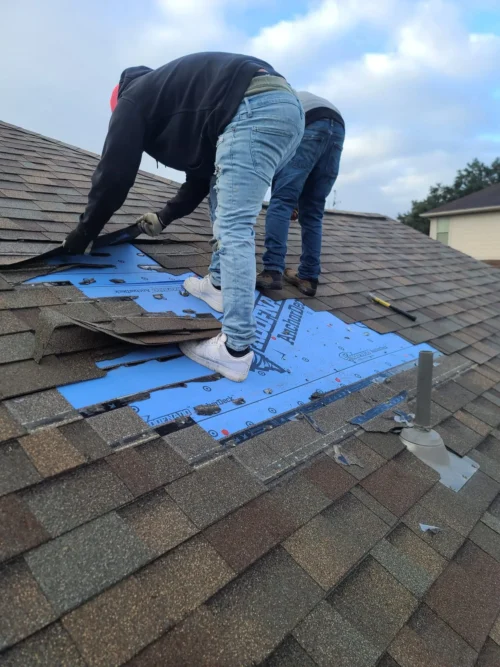
A roof leak never arrives alone. It brings stains on the ceiling, funky smells, and the kind of anxiety that spikes every time clouds roll in. The good news: with a calm, methodical approach, you can spot the source, apply safe temporary measures, and decide when it’s time to call a pro like Rhino-vations.
Roof Leak 101: Fast Safety Tips & What Not to Do
Before you grab a ladder, a quick reality check. Most injuries in roof repairs happen in the first 10 minutes due to wet surfaces, poor footing, or rushing.
Do first
- Wait until the roof is completely dry before stepping on it.
- Use a stable ladder on level ground; have a spotter.
- Wear soft-soled shoes, gloves, and eye protection.
- Power off electricity in rooms with active dripping to reduce risk.
- Protect interiors: move furniture, place buckets, lay down plastic.
Don’t do
- Don’t walk a roof during rain or right after; it’s slippery and unsafe.
- Don’t over-caulk everything you see messy sealing often traps water.
- Don’t rely on a “quick fix” as permanent; temporary measures buy time only.
In my inspections, the fastest way leaks go from nuisance to nightmare is climbing on a damp roof or slathering sealant where it doesn’t belong. Slow and safe wins.
How to Spot a Roof Leak Early (Ceiling, Walls & Attic)
Catching leaks early often saves drywall, insulation, and your sanity.
Interior signs
- Tan or brown rings (watermarks) on ceilings or upper walls.
- Musty odors or visible mold in corners or around vents.
- Sagging drywall (even slight cupping is a red flag).
- Bubbling paint or peeling tape seams.
Exterior signs (ground-level scan with binoculars if possible)
- Missing, cracked, or curled shingles; scattered granules in gutters.
- Popped/exposed nails (the heads can look shiny or rusty).
- Cracked or lifted flashing around chimneys, walls, skylights, valleys.
- Aging vent boots/pipe jacks plastic can crack; rubber loses its seal.
Attic check (the confirmation step)
- Go up while it’s raining or soon after.
- Use a flashlight and follow the stain uphill (water travels along rafters).
- Look for dark, damp wood, tiny drips, or light infiltration.
- Note proximity to vents, pipe jacks, or flashing these are usual suspects.
Time and sun are brutal. Around years 5–10, I often find exposed nails and vent/pipe jack seals that have turned brittle, letting water sneak in. That aging pattern is the #1 cause I see.
Find the Source: Hose Test, Attic Tracing & Usual Suspects
When rain isn’t cooperating, a controlled test helps.
Hose test (two people)
- Person A on the roof (safely, on a dry day). Person B in the attic/interior.
- Wet one area at a time for a few minutes: downhill to uphill (eaves → field → penetrations → ridge).
- Communicate in real time; when a drip appears, you’ve narrowed the zone.
Usual suspects (ranked by frequency I encounter)
- Exposed or backed-out nails: small holes that let water track into the deck.
- Roof vents & pipe jacks: cracked plastic, hardened rubber, or loose fasteners.
- Flashing (chimneys, walls, valleys): nails exposed, sealant failed, or flashing lifted.
- Shingle damage: impact cracks, missing tabs, thermal splitting.
- Membranes on flat sections: punctures, seam failures, or ponding areas.
Nine times out of ten, when I pull back a shingle near a stain, I’ll find either a nail head exposed or a vent boot that’s no longer sealing tightly. It’s humble, but it leaks like crazy.
Small, Temporary Fixes You Can Do (When It’s Safe)
These buys time until a proper repair. Keep expectations realistic.
From inside the attic (only if easily accessible)
- Light, targeted spray sealant on a pinpoint drip can slow water ingress.
- Place a drip tray or hose a temporary drain line to a bucket to protect drywall.
- Add plastic sheeting over insulation right under the leak to keep it dry.
From the roof (dry day, low pitch, confident footing)
- Tarping: Secure a tarp that extends 2–3 feet beyond the suspect area; anchor under shingle edges or with sandbags (avoid nailing through the leak zone).
- Nail head stop-gap: If a single exposed nail is obvious and accessible, a temporary dab of roofing sealant over the head can help but it’s not a structural fix.
What not to do
- Don’t smear sealant across entire flashings; water needs proper pathways.
- Don’t lift shingles aggressively; you may crack them and worsen the issue.
I only endorse the attic-side spray as a stopgap when the spot is clearly visible and reachable. It’s not a cure; it’s a “hold the fort” move until we can repair on a fully dry roof.
When Not to DIY and When to Call a Roofer (Checklist)
Call a pro ideally Rhino-vations when you see any of the following:
- Hard-to-access attic or you’d need tall ladders/steep pitch.
- Multiple stains or you can’t isolate the source with a hose test.
- Active sagging, mold spread, or suspected electrical exposure.
- Flashing issues at chimneys/sidewalls/valleys (detail work required).
- Flat roof membranes (EPDM/TPO/PVC) with seam or puncture problems.
- You want a warranty and documented repair for future insurance or sale.
I rarely recommend DIY beyond temporary measures. The line is safety and certainty: if it risks a fall or you can’t prove the source, it’s time for a professional repair with warranty.
Our Roof Leak Repair Process at Rhino-vations (What to Expect)
Here’s how we keep things safe, thorough, and repeatable:
1- Inspection & Documentation
- We start with a visual exterior check and an attic inspection when accessible.
- We take photos and short videos, marking suspect zones (vents, nails, flashing, shingles).
2- Source Confirmation
- If needed, we perform a controlled hose test section by section.
- We trace water paths along the framing to confirm the exact entry point.
3- Clear Plan & Estimate
- You get a simple report: what failed, recommended fix, materials, and timing.
- We explain why the leak happened (age, UV, installation detail, storm impact).
4- Repair Day (Roof Completely Dry)
- Replace damaged shingles, vent boots/pipe jacks, or re-seat flashing as required.
- Use the proper fasteners and sealants compatible with your roof system.
- Re-seal nail heads only where appropriate; we don’t over-caulk.
5- Final Check, Photos & Warranty
- Post-repair inspection with photos.
- We discuss warranty coverage for the repair and recommended maintenance.
Experience note: aging (often 5–10 years of sun) is the silent culprit. Our process focuses on those stress points exposed nails, vent boots, and flashing nails because that’s where we find the leaks most.
Materials & Tools We Use to Make It Last (and Why)
- Shingles & underlayment matched to your existing roof compatibility prevents telegraphed seams.
- Premium vent boots/pipe jacks (UV-resistant rubber or long-life alternatives).
- Corrosion-resistant roofing nails set to proper depth (no overdriving).
- Flashing sized and seated correctly; step flashing at sidewalls.
- Roofing sealants chosen for substrate (asphalt/metal/flat membrane).
- Safety gear: harnesses, proper ladders, and anchors because repairs don’t matter if you’re not safe.
I’ve seen too many leaks return because a brittle vent boot was replaced with the same short-life material. We prefer components with better UV resistance to stretch the time to the next maintenance.
Common Mistakes Homeowners Make (and How We Avoid Them)
Over-sealing everything
- Mistake: caulk as a cure-all.
- Our approach: restore correct water-shedding paths first; sealant is the last 5%, not the first.
Ignoring exposed nails
- Mistake: “It’s tiny; how bad can it be?”
- Our approach: we re-fasten or replace as needed and protect the head properly.
Skipping the attic
- Mistake: patching outside without tracing the interior water path.
- Our approach: attic inspection is standard; leaks often teleport along rafters.
Climbing on a wet roof
- Mistake: urgency over safety.
- Our approach: we schedule repairs for dry conditions; temporary interior measures keep you protected meanwhile.
One memorable call: a homeowner slathered tar over a chimney flashing. It trapped water, rotted the deck, and turned a small fix into a section rebuild. Proper flashing > bucket of tar, every time.
FAQs About Roof Leak Repair
Start indoors: trace the stain in the attic, then confirm with a two-person hose test outside small zones, slow and steady.
You can slow it with attic-side spray sealant, but permanent fixes require addressing the exterior entry point (shingle/vent/flashings).
Use a roofing-grade sealant compatible with your roof type; apply sparingly and only to the targeted area.
No wait for a completely dry roof. If water is entering, manage it inside and call a pro.
Repairs typically include a workmanship warranty specific to the scope. We’ll explain terms before work begins.
Ready for Help? Inspection & Warranty Information
If you’re seeing stains, musty smells, or suspect vents/pipe jacks, book an inspection with Rhino-vations. We’ll document the source, repair it right the first time, and back it with a clear warranty no guesswork, no messy tar jobs.
When in doubt, call. A quick, professional fix is almost always cheaper than chasing water across ceilings and studs.
Conclusions
Leaks are predictable: exposed nails, aging vent boots, and flashing details fail after years of sun. Find signs early, use temporary measures safely, and bring in a pro when access is risky or the source isn’t obvious. At Rhino-vations, our process inspection, source confirmation, precise repair, and warranty exists to do one thing: stop leaks for good.