


Quick Answer How Much Is the SAH Grant in FY 2026?
If you’re here for the number, here it is:
- SAH (Specially Adapted Housing) grant maximum for FY 2026: $126,526.
- SHA (Special Home Adaptation) grant maximum for FY 2026: $25,350.
- TRA (Temporary Residence Adaptation) maximums for FY 2026:
- $50,961 if you’re eligible for SAH
- $9,100 if you’re eligible for SHA
Those are the top-line caps people usually mean when they search “SAH grant amount 2026.”
SAH max amount (FY 2026)
$126,526 is the maximum available for eligible Veterans in FY 2026.
SHA max amount (FY 2026)
SHA has a separate, lower maximum of $25,350 in FY 2026.
TRA amounts (FY 2026)
TRA is for adapting a temporary residence (for example, if you’re staying with a family member). The FY 2026 maximum depends on whether you qualify under SAH or SHA.
“2026” Means Fiscal Year Here’s the Date Range (and Why It Matters)
One of the most common points of confusion: when the VA lists “FY 2026,” that’s the federal fiscal year, not January–December.
FY 2026 runs from October 1, 2025 through September 30, 2026.
Why that matters:
- If you’re seeing different numbers online, you might be looking at FY 2025 vs FY 2026.
- The VA updates these caps annually, so “2026 SAH amount” is really “FY 2026 SAH max.”
How VA updates the max amount each year
The official amounts are published through VA guidance and Federal Register notices that track the annual update process for these grants.
SAH vs SHA vs TRA: Which Grant Fits Your Situation?
People often say “SAH” when they really mean “VA housing adaptation grants” in general. Here’s the clean way to think about it:
- SAH: Typically the larger benefit, designed for major adaptations that support independent living and accessibility.
- SHA: A smaller cap, generally tied to different eligibility scenarios than SAH.
- TRA: A temporary adaptation benefit when the home you’re living in isn’t your permanent one.
The VA’s own page lays out SAH, SHA, and TRA together, which is a good clue: search intent isn’t just “what’s the number,” it’s “what applies to me.”
Permanent home vs a family member’s home
TRA becomes relevant when the place you’re modifying is not your permanent residence often a family member’s home. This is one of the fastest ways to avoid wasted time: match the grant type to your living situation early.
Using the benefit multiple times (lifetime cap concept)
Another detail many people miss: the VA notes you can use SAH/SHA funds up to 6 times over your lifetime up to the maximum total amount.
In practice, that means you don’t always have to do one giant project all at once. It can be phased if your needs, home, or budget change so long as you follow VA requirements and don’t exceed the cap.
What Can SAH/SHA Funds Be Used For? Real-World Examples of Adaptations
The VA’s pages explain eligibility and the existence of the grants, but most homeowners and families want to know what this looks like in real life: What do we actually build?
What changes? What should be in the plan?
In my day-to-day view of VA adaptation projects, the best outcomes come from scoping improvements around one simple goal: safe movement, safe transfers, and usable spaces without creating new hazards or future maintenance headaches. That’s the mindset we bring when we’re planning accessibility work tied to SAH/SHA.
Below are examples that commonly appear in accessibility scopes (exact approval depends on your eligibility and VA review, so treat these as practical examples not guarantees).
Entry + circulation (ramps, doorways, layout)
Common modifications include:
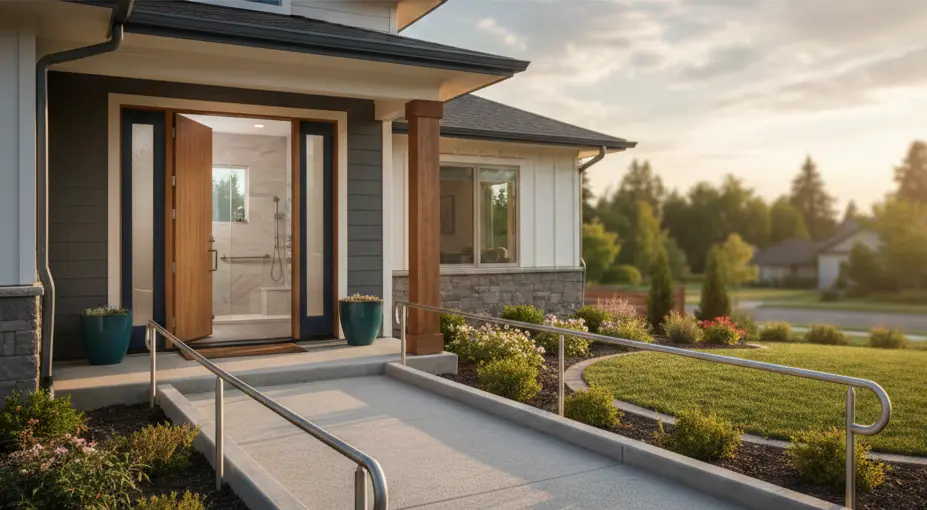
- Ramps or improved entry transitions
- Widened doorways
- Layout adjustments that improve turning radius and navigation
These are the kinds of items Rhinovations calls out as typical disability adaptation work (doorway widening, ramps).
Kitchen + bath accessibility upgrades (common scopes)
A lot of projects focus on making core daily routines workable:
- Adjusting counter heights
- Improving bathroom usability (often the highest-impact room in accessibility planning)
Even when the “grant amount” is the headline, kitchens and baths are where scope creep can happen fast so clear line items and a tight plan matter.
Safety and independence upgrades
Small details can make a big difference:
- Lever-style door handles
- Improved lighting
These are explicitly listed as common adaptation examples in Rhinovations’ VA services context.
The Approval Process (Plain English): From Consultation to Final Inspection
This is where most articles stop short. Numbers are easy. Execution is where projects succeed or fail.
When I map the SAH/SHA process for homeowners, I explain it in five practical stages (this mirrors the kind of workflow Rhinovations outlines for VA adaptation projects):
- Initial consultation understand needs, measure the home, identify constraints.
- Proposal + plan creation floor plan + a proposal that matches the accessibility need.
- Document approval steps signing, selecting a contractor, assembling what VA needs.
- VA review Rhinovations notes this may take about 1 week to 1 month (treat that as a rough estimate; real timelines vary).
- Build phases + final inspection including permits/HOA steps, then a final inspection at completion.
What a strong proposal/bid looks like
A “strong” proposal isn’t fancy it’s approvable. In practice, that means:
- Clear scope tied to accessibility goals (not vague remodeling language)
- Line items that are easy to review (materials + labor + location in the home)
- A plan/floor layout where needed
Rhinovations explicitly references producing a floor plan + proposal aligned to VA needs this is exactly the type of detail most generic grant articles miss.
Timeline expectations + common delay points
From the project side, the usual delay drivers are predictable:
- Missing details in the scope (unclear line items, unclear purpose)
- Late decisions on finishes/equipment that change measurements
- Permitting or HOA requirements you didn’t anticipate
Rhinovations calls out permits and HOA as part of job preparation worth mentioning because it’s a real-world friction point.
Permits/HOA and “phase” planning
If you’re trying to maximize your SAH funding (or just finish the project faster), phased planning helps:
- Phase 1: entry/access changes
- Phase 2: circulation changes
- Phase 3: bathroom
- Phase 4: kitchen/safety items
You don’t have to copy a contractor’s internal phases, but you do want your project plan to read like a real build not a wish list.
Tips to Make Your SAH Project Smoother (Contractor + Homeowner Checklist)
This is the section I wish more people read before they start calling contractors.
Questions to ask any contractor
- Have you built accessibility modifications before? Ask for examples like ramps, doorway widening, counter-height adjustments.
- Will you provide a plan + detailed bid? “One number” quotes usually create headaches later.
- How do you handle permits and HOA constraints? Don’t let this surprise you mid-project.
- What are the inspection/closeout steps? Plan for finishing details early so you’re not stuck at the end.
Documents you’ll want ready
- Basic home info (address, ownership details)
- Notes on mobility/access needs (what spaces are not usable today)
- Photos/video walkthrough (helps clarify scope early)
- A prioritized list: “must-have” vs “nice-to-have” (so the bid stays within the cap)
FAQs About the SAH Grant Amount (FY 2026)
Yes the VA lists the maximum SAH amount for FY 2026 as $126,526.
It’s fiscal year. FY 2026 = Oct 1, 2025 to Sep 30, 2026.
The VA lists $25,350 as the FY 2026 maximum for SHA.
TRA maximums for FY 2026 are $50,961 (if SAH-eligible) or $9,100 (if SHA-eligible).
Not necessarily. The VA notes the benefit can be used up to 6 times over your lifetime, up to the maximum total.
Conclusions
The search term “SAH grant amount 2026” is really two questions: the exact number (FY 2026 max is $126,526) and what to do next so that number turns into a finished, accessible home.
If you take one practical takeaway from this guide, make it this: a clean, approvable scope and proposal is what keeps an SAH project moving. That’s why we emphasize consultation → plan/proposal → VA review → permits/HOA prep → phased build → final inspection in real adaptation work.