


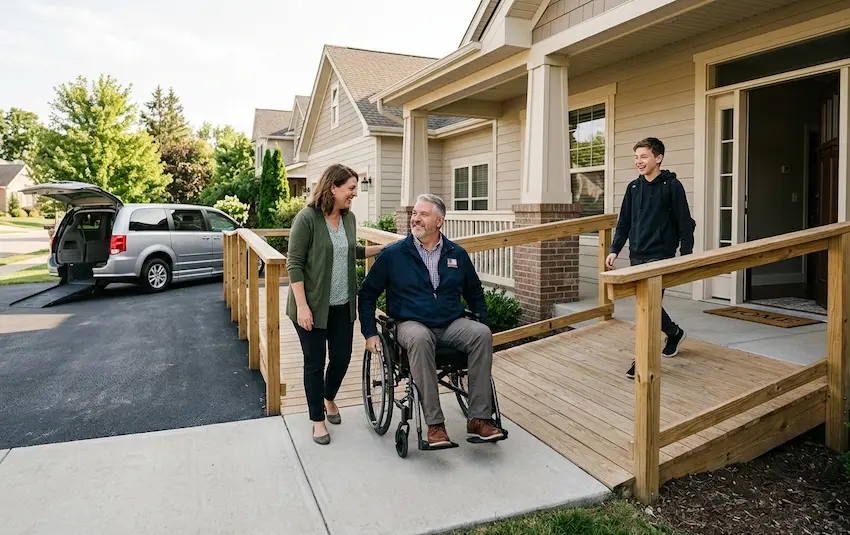
If you are a veteran living with a qualifying service-connected disability, the Specially Adapted Housing (SAH) grant can help you buy, build, or modify a home so it better fits your daily needs. In plain English, this VA benefit is designed to make independent living more realistic by funding changes such as ramps, widened doorways, and other accessibility-related improvements. The official VA page frames SAH as part of its disability housing grants program for veterans and service members with certain service-connected disabilities.
What makes this grant especially important is that it is not limited to one narrow scenario. Depending on your situation, the funds may be used to buy an adapted home, build one, or change an existing permanent home. That flexibility is one of the biggest reasons veterans search for this topic, and it is also where many articles stay too general. The real question is not just “What is the SAH grant?” but “Do I qualify, what can I use it for, and how do I avoid mistakes before starting the project?”
What Is the Specially Adapted Housing (SAH) Grant?
The SAH grant is one of the VA’s disability housing grants. According to the VA, it is intended for veterans or service members who want to use grant money to buy, build, or change a permanent home they own or will own, provided they also have a qualifying service-connected disability. The goal is to help create a living space that supports safer and more independent day-to-day life.
This is where the SAH grant differs from many other home improvement programs. It is not a generic remodeling benefit. It is tied to disability-related housing needs and specific eligibility rules. Competitor content also highlights that SAH is generally associated with mobility-related challenges inside and around the home, while other grant categories may fit different disability profiles or temporary living situations better.
SAH Grant Eligibility Requirements
To qualify for an SAH grant, the VA says both of these must be true: you own or will own the home, and you have a qualifying service-connected disability. The home also needs to be your permanent home, meaning the place you plan to live in for the long term.
The VA lists several examples of qualifying service-connected disabilities for SAH eligibility, including:
- loss or loss of use of more than one limb,
- loss or loss of use of a lower leg together with lasting effects of an organic disease or injury,
- blindness in both eyes with 20/200 visual acuity or less,
- certain severe burns, and
- loss or loss of use of one lower extremity after September 11, 2001, when it prevents balancing or walking without devices such as braces, crutches, canes, or a wheelchair.
There is also an important detail many pages gloss over: for the post-9/11 one-extremity pathway, the VA notes that only 120 veterans and service members per fiscal year can qualify under that specific category because of a congressional limit. If someone qualifies but cannot receive the benefit in the current fiscal year due to that cap, they may still be able to receive it in a future year.
How Much Is the SAH Grant in 2026?
For fiscal year 2026, the VA states that the maximum SAH grant amount is $126,526. That figure matters because many older articles cite outdated numbers. The VA also explains that the maximum can be adjusted from year to year based on construction costs, so any article about this topic should use the current official number rather than recycled estimates.
Another detail worth knowing is that eligible veterans do not have to use the full grant in one shot. The VA says eligible applicants can use SAH or SHA funds up to 6 different times over their lifetime. If only part of the money is needed now, the remaining amount may still be available later, subject to the current total maximum in the last year the grant is used. That flexibility can be extremely helpful when a project is phased over time.
What Can an SAH Grant Be Used For?
This is one of the most important sections for search intent, because people rarely search the term just to memorize eligibility. They want to know what the grant can actually pay for. Based on the VA and supporting competitor coverage, SAH funds may be used to:
- build a specially adapted home on land that will be purchased,
- build on land already owned,
- remodel an existing home that can meet VA requirements, or
- purchase a home that is already adapted, including using the grant toward the unpaid balance on that adapted home.
The VA’s own page mentions examples such as installing ramps or widening doorways. In real projects, the conversation often goes beyond those basics and includes bathrooms, safer transitions, access routes, and mobility-friendly layouts. Rhino-vations describes its veteran-focused adaptation work as including accessibility upgrades, bathroom modifications, ramps, and mobility improvements, which aligns closely with the types of practical changes veterans often explore when planning an adapted home.
From a contractor perspective, this is where project planning matters a lot. Rhino-vations says it provides VA-approved home adaptation services and focuses on customized renovations to improve safety, comfort, and independence for veterans. That kind of positioning is useful because many applicants understand they may qualify for funding, but they are less sure how to translate that eligibility into a realistic scope of work.
SAH vs SHA vs TRA: What Is the Difference?
A lot of confusion around the specially adapted housing SAH grant comes from overlapping acronyms. The VA separates the benefits into SAH, SHA, and TRA, and each serves a different use case. SAH is the larger grant intended for certain veterans with qualifying service-connected disabilities who are buying, building, or modifying a permanent home they will own.
SHA, or Special Home Adaptation, is also for a permanent home, but the ownership rule is slightly broader: the VA says you or a family member may own or will own the home. For FY 2026, the VA lists the maximum SHA amount as $25,350. Its qualifying disabilities are also different, including loss or loss of use of both hands, certain severe burns, and certain respiratory or breathing injuries.
TRA, or Temporary Residence Adaptation, applies when a veteran is living temporarily in a family member’s home that needs changes to meet their needs, and the veteran already qualifies for SAH or SHA. For FY 2026, the VA says the TRA maximum is $50,961 for those qualifying under SAH and $9,100 for those qualifying under SHA. Competitor content explains the practical distinction well: TRA is for temporary residence situations, while SAH and SHA are tied to permanent-home scenarios.
How to Apply for a VA SAH Grant
The VA states that applicants can apply online, and it also notes that applications may be submitted by mail or in person. The official disability housing grants page links directly to the application pathway and to additional “how to apply” guidance.
After applying, competitor guidance indicates the application is processed and a decision letter is sent, while claim or status tracking can be checked through VA channels. If an application is denied, the VA has decision review or appeal options. Even though the official page is the authority, this extra procedural framing is useful because it answers the “what happens next?” question that many searchers have.
A practical tip here is to think about the application and the construction scope together, not as two separate projects. Rhino-vations presents itself as a team with more than 15 years serving Houston homeowners and veterans, combining remodeling and VA-approved home adaptation services. For a veteran, that kind of contractor familiarity can matter because the smoother the scope definition is at the start, the easier it becomes to connect funding, design, and execution.
How to Choose the Right Contractor for an SAH Project
The grant itself is only one part of the process. The other part is choosing a contractor who understands accessibility work and can translate a veteran’s mobility or daily-living needs into practical upgrades. Rhino-vations states that its veteran services are designed to help veterans live more comfortably, safely, and independently, with projects tailored to each veteran’s needs and eligibility. That type of positioning is exactly what applicants should be looking for: not just a general remodeler, but someone who understands adaptation work in context.
In our field, one of the biggest problems is not usually whether a ramp, bathroom modification, or mobility improvement is possible. It is whether the project has been scoped correctly from the start. A smart SAH project begins with clear priorities: how the veteran enters the home, moves between rooms, uses the bathroom, and manages everyday routines safely. The more closely the project plan reflects those needs, the more likely the result will actually improve independence rather than just “check boxes.” This practical framing is consistent with the VA’s purpose for disability housing grants and with Rhino-vations’ emphasis on customized veteran-focused adaptations.
Final Thoughts on the SAH Grant
The specially adapted housing SAH grant is one of the most valuable VA housing benefits for eligible veterans because it can fund meaningful changes that improve mobility, safety, and independence at home. The essentials are straightforward: confirm eligibility, verify the current funding amount, understand whether SAH is the right program versus SHA or TRA, and line up a project scope that reflects real daily needs.
For 2026, the official VA page remains the key source for the current maximum amounts and core eligibility rules, while competitor resources can help fill in practical comparisons. On the execution side, Rhino-vations’ veteran-services positioning suggests a useful editorial angle for your brand: explain the grant clearly, then help readers understand how those funds turn into real-world accessibility improvements such as ramps, bathroom modifications, and mobility-focused home changes.
FAQs
The VA says the maximum SAH amount for FY 2026 is $126,526.
Yes. The VA says eligible applicants can use SAH or SHA money up to 6 different times over their lifetime.
SAH is generally for certain veterans with qualifying service-connected disabilities who own or will own their permanent home, while SHA has different qualifying disabilities and can apply when you or a family member own or will own the permanent home.
That may point to the TRA grant, but only if you already qualify for SAH or SHA and the home needs changes to meet your needs.
The VA mentions changes such as installing ramps or widening doorways, and SAH may also be used to build, buy, or remodel an adapted home depending on the situation.
The VA says you can apply online, and it also provides mail and in-person application options through its housing grant process.
Conclusions
For veterans trying to understand the Specially Adapted Housing (SAH) grant, the best approach is to treat it as both a benefits question and a project-planning question. The benefit side covers eligibility, current grant limits, and the application path. The project side covers what changes will actually make the home safer and more functional. When both parts are aligned, the grant becomes much more than funding on paper it becomes a practical path to independent living.