


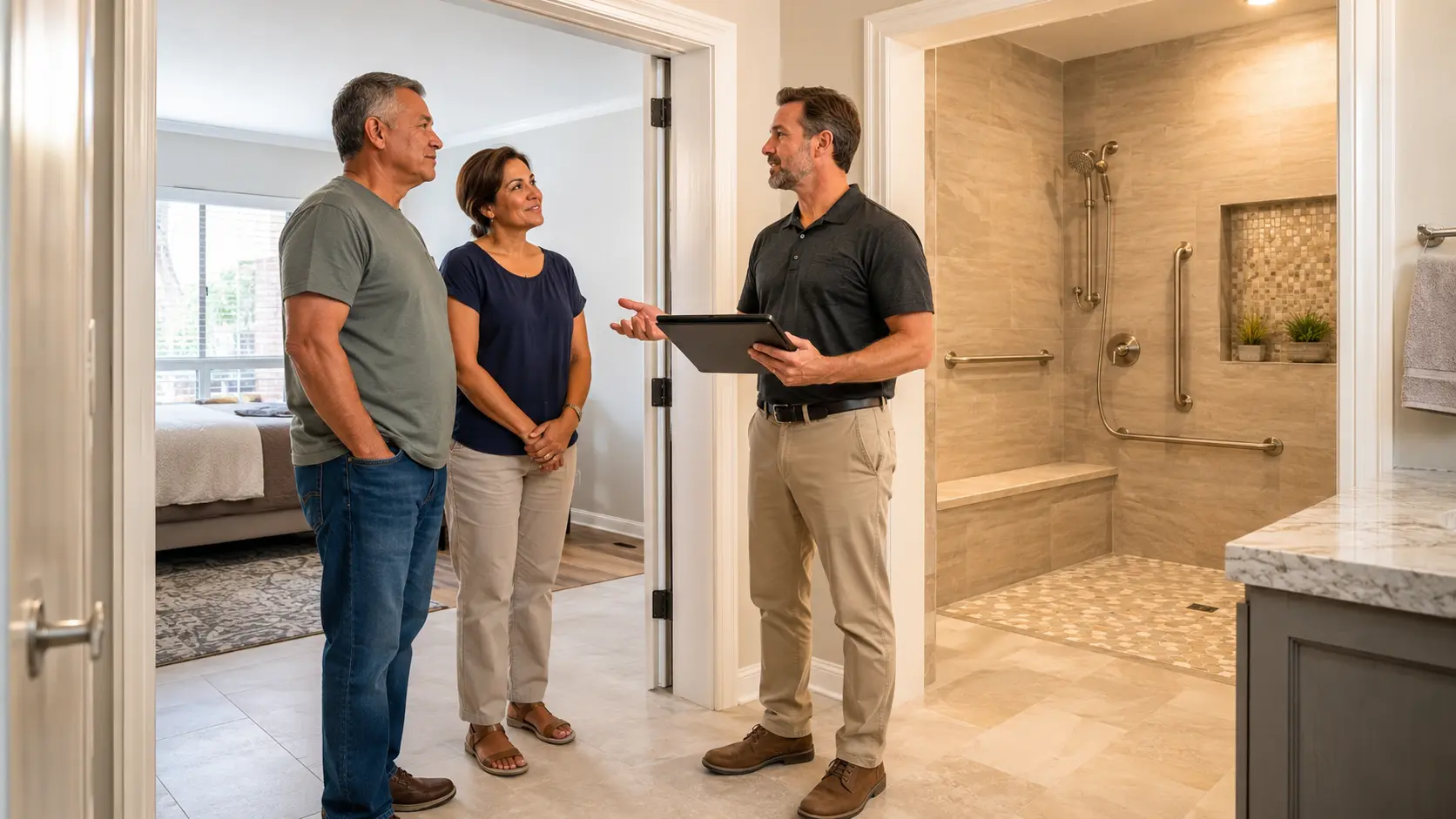
Veterans and service members with certain service-connected disabilities may qualify for financial assistance to purchase or modify a home that better supports their daily needs.
One of the programs available through the U.S. Department of Veterans Affairs is commonly known as the SHA grant. The VA currently refers to it as the Special Home Adaptation grant, although it is also frequently described as the Special Housing Adaptation grant.
The SHA grant can help eligible veterans create a safer and more functional permanent home. However, it is not the same as the Specially Adapted Housing grant, commonly called the SAH grant.
The programs have different disability requirements, ownership rules, funding limits, and typical project scopes. Understanding those differences can help veterans and their families identify the program that may fit their situation before beginning a home modification project.
What Is the SHA Grant?
The SHA grant is one of the VA’s disability housing grants for veterans and service members with certain qualifying service-connected disabilities.
It may be used to buy, build, or modify a permanent home so that the property better accommodates the veteran’s disability and supports more independent living.
For SHA eligibility, the veteran or a family member must own or plan to own the permanent home. The applicant must also have a disability that falls within one of the qualifying categories established by the VA.
The grant is not a general home improvement benefit. Proposed modifications must relate to the veteran’s disability and the approved accessibility needs of the home.
Eligibility is determined by the VA—not by the contractor, homeowner, lender, or medical equipment provider.
Who May Qualify for an SHA Grant?
According to the VA, qualifying service-connected disabilities for the SHA grant include:
- Loss or loss of use of both hands
- Certain severe burns
- Certain respiratory or breathing injuries
The veteran must also plan to use the funds for a permanent home that the veteran or a family member owns or will own.
Having a disability rating does not automatically mean a veteran qualifies for SHA. The service-connected condition must meet the VA’s program-specific requirements.
Veterans who are uncertain whether their disability falls under SHA or SAH should apply through the VA or speak with an accredited Veterans Service Organization representative. A contractor can help evaluate the home and develop a practical adaptation scope, but cannot approve grant eligibility.
How Much Is the SHA Grant?
For fiscal year 2026, the VA lists a maximum SHA grant amount of $25,350.
Fiscal year 2026 runs from October 1, 2025, through September 30, 2026. The maximum amount may be adjusted in future fiscal years based on changes in construction costs.
The published maximum is not an automatic payment to every eligible applicant. The amount used for a project depends on the approved adaptations, the property, the contractor’s proposal, and the remaining benefit available to the veteran.
Eligible veterans do not have to use the entire grant at one time. The VA currently allows SAH and SHA grant funds to be used up to six different times over the veteran’s lifetime, up to the applicable total maximum benefit.
This can be useful when adaptations must be completed in phases or when the veteran’s housing needs change later.
What Can an SHA Grant Be Used For?
The SHA grant may be used to help an eligible veteran:
- Modify a permanent home the veteran or a family member already owns
- Modify a home the veteran or family member plans to purchase
- Purchase a home that has already been adapted
- Build or change a permanent home under the applicable VA requirements
The property must be intended as the veteran’s long-term residence.
The specific improvements included in an approved project depend on the veteran’s disability, functional needs, home layout, available funding, and VA approval.
Potential home adaptations may include the following.
Accessible Bathrooms
Bathrooms can be difficult or unsafe when fixtures, entrances, controls, and bathing areas are not designed around the user’s physical abilities.
Depending on the approved scope, bathroom modifications may include:
- Wider bathroom entrances
- Barrier-free or low-threshold showers
- Accessible shower controls
- Strategically placed grab bars
- Accessible sinks and vanities
- Improved space around fixtures
- Slip-resistant flooring
- Lever-style handles
- Additional support features
- Improved lighting and visibility
The goal should be to create a bathroom that supports safe daily use rather than simply adding individual accessibility products without considering the complete layout.
Accessible Kitchens
Kitchen adaptations can help make food preparation, storage, appliances, and essential work areas easier to reach and operate.
An approved kitchen project may include:
- Accessible countertops
- Lower or adjustable work areas
- Reachable storage
- Modified cabinet configurations
- Accessible sinks and controls
- Improved circulation space
- Lever-style faucets
- Safer appliance placement
- Better lighting
Kitchen adaptations should be based on how the veteran actually moves through and uses the room.
Doorway and Hallway Modifications
Narrow doorways and hallways can restrict movement and make essential areas of a home difficult to access.
Possible improvements may include:
- Widening selected doorways
- Changing door swing direction
- Installing easier-to-operate hardware
- Removing unnecessary thresholds
- Improving hallway clearances
- Reconfiguring transitions between rooms
The VA gives widened doorways as one example of the types of changes that disability housing grants may support.
Accessible Entrances
A safe entrance may require more than placing a portable ramp near the front door.
Depending on the veteran’s needs and the approved design, an entrance project could involve:
- A permanent ramp
- An improved landing
- Safer handrails
- A wider exterior doorway
- Threshold modifications
- Better exterior lighting
- A covered entry area
- Improved access from the driveway or garage
The ramp slope, landings, drainage, available space, and connection to the home must all be considered during planning.
Bedroom Adaptations
Bedroom modifications may help the veteran move safely, use mobility equipment, access storage, and reach an accessible bathroom.
Possible adaptations include:
- Wider bedroom entrances
- Improved circulation space
- Accessible storage
- Modified closet systems
- Safer flooring
- Improved lighting
- Better access to switches and controls
- Connections to an accessible bathroom
Controls, Hardware, and Functional Features
For veterans with loss or loss of use of both hands, the ability to operate common household controls may be an important consideration.
Adaptations could include:
- Lever-style door handles
- Easier-to-use faucets
- Accessible switches
- Modified cabinet hardware
- Automatic or touchless controls
- Improved thermostat access
- Accessible window hardware
- Smart home features when approved and appropriate
The approved scope should reflect the individual veteran’s abilities rather than relying on a one-size-fits-all accessibility checklist.
Does the SHA Grant Cover Any Home Improvement?
No. The SHA grant is not intended to fund unrelated cosmetic remodeling or general property upgrades.
A project should be connected to the veteran’s qualifying disability and the adaptations needed to make the permanent home more usable.
Examples of work that may not qualify on its own include:
- Cosmetic kitchen renovations
- Decorative flooring upgrades
- Luxury fixtures
- Unrelated room additions
- General landscaping
- Exterior improvements unrelated to accessibility
- Repairs caused only by normal property maintenance
- Remodeling based primarily on appearance
A project may include attractive finishes, but the central purpose must remain disability-related adaptation.
Veterans should not begin construction or assume that completed work will be reimbursed before receiving instructions and approval from the VA.
How Is the SHA Grant Different From the SAH Grant?
The SHA and SAH grants are both part of the VA’s disability housing assistance program, but they are not interchangeable.
The most important differences involve disability eligibility, home ownership, maximum funding, and the scale of adaptations typically associated with each program.
SHA vs. SAH Comparison
| Feature | SHA Grant | SAH Grant |
| Full name | Special Home Adaptation | Specially Adapted Housing |
| Home type | Permanent home | Permanent home |
| Ownership | Veteran or family member owns or will own the home | Veteran owns or will own the home |
| Qualifying disabilities | Loss or loss of use of both hands, certain severe burns, or certain respiratory injuries | Includes loss or loss of use of more than one limb, qualifying blindness, certain severe burns, and other listed mobility-related conditions |
| FY 2026 maximum | $25,350 | $126,526 |
| Typical project scale | Targeted adaptations based on qualifying needs | Often associated with broader barrier-free construction or major adaptations |
| Lifetime use | Up to six uses within the total benefit | Up to six uses within the total benefit |
The current eligibility rules and fiscal year 2026 amounts are published by the VA.
Difference 1: Qualifying Disabilities
The disability categories for SHA are narrower and different from those used for SAH.
The VA currently lists the following categories for SHA:
- Loss or loss of use of both hands
- Certain severe burns
- Certain respiratory or breathing injuries
For SAH, qualifying disabilities may include:
- Loss or loss of use of more than one limb
- Loss or loss of use of a lower leg together with lasting effects of an organic disease or injury
- Blindness in both eyes with visual acuity of 20/200 or less
- Certain severe burns
- Loss or loss of use of one lower extremity after September 11, 2001, when the condition prevents balance or walking without specified mobility aids
A congressionally established annual limit applies to SAH grants awarded solely under the qualifying post-September 11 loss-of-one-lower-extremity category.
Veterans should not select between the grants based only on the type of remodeling they want. The VA first considers whether the service-connected disability meets the legal eligibility criteria for the program.
Difference 2: Home Ownership
For SAH, the eligible veteran must own or plan to own the permanent home.
For SHA, the ownership rule is broader. The veteran or a family member may own or plan to own the permanent home.
This distinction can be important for veterans who live permanently with a parent, adult child, sibling, or another family member.
Ownership documentation and the veteran’s intended living arrangement should be discussed during the application and project-planning process.
Difference 3: Maximum Funding
For fiscal year 2026:
- The maximum SHA benefit is $25,350
- The maximum SAH benefit is $126,526
These maximum amounts may change in later fiscal years.
The higher SAH maximum reflects the potentially extensive nature of projects associated with that program, which may include constructing a specially adapted home or making significant changes throughout an existing property.
The SHA grant generally has a lower maximum and may be used for a more focused adaptation scope.
However, the correct grant is determined by eligibility—not by selecting the program with the higher funding limit.
Difference 4: Typical Project Scope
SAH is commonly associated with major adaptations that create a broadly accessible or barrier-free living environment.
Depending on the approved project, SAH work may affect:
- Entrances and exits
- Bathrooms
- Kitchens
- Bedrooms
- Hallways
- Doorways
- Flooring transitions
- Exterior access
- Multiple areas throughout the home
SHA may support more targeted modifications based on the veteran’s qualifying disability and how the home must function.
This does not mean every SAH project is large or every SHA project is small. Each project is based on the veteran’s approved needs, home conditions, benefit availability, and VA requirements.
Can SHA Be Used for a Family Member’s Home?
Yes, when the home will be the veteran’s permanent residence and the veteran or family member owns or will own it.
This is one of the major differences between SHA and SAH.
If the veteran is only living temporarily in a family member’s home, the Temporary Residence Adaptation grant may be more relevant.
A veteran must already qualify for SAH or SHA to qualify for TRA. For fiscal year 2026, the maximum TRA amount connected to SHA eligibility is $9,100.
Permanent and temporary living arrangements should not be treated as the same situation when evaluating the available programs.
Can You Use the SHA Grant More Than Once?
Yes. The VA states that eligible veterans may use SAH or SHA grant funds up to six times during their lifetime.
The combined amount used cannot exceed the applicable total grant benefit.
A veteran may use only the amount needed for an approved project and preserve the unused benefit for a later adaptation. Because maximum grant amounts may be adjusted annually, the available amount for a later use may depend on the rules in effect during the final year the benefit is used.
Using the grant in phases may be helpful when:
- Immediate safety modifications are needed first
- A larger renovation will happen later
- The veteran moves to another permanent residence
- Accessibility needs change over time
- The initial project does not require the full available benefit
Phased planning should still be coordinated with the VA so that the veteran understands how each project affects the remaining grant benefit.
How to Apply for an SHA Grant
Veterans and service members can apply online through the VA.
Applications may also be submitted by mail or in person using VA Form 26-4555, Application in Acquiring Specially Adapted Housing or Special Home Adaptation Grant.
Before beginning the application, the VA advises applicants to have:
- Their Social Security number
- Their VA file or claim number, when available
After the application is processed, the VA sends a decision letter. Applicants can also check the claim status through their VA.gov account.
A basic application process may look like this:
1. Review the VA Eligibility Requirements
Compare the service-connected disability and ownership situation with the current VA requirements for SHA and SAH.
2. Submit the Application
Apply online or complete VA Form 26-4555 and submit it according to the VA’s current instructions.
3. Wait for the VA Decision
The VA reviews the claim and determines whether the applicant qualifies for an adapted housing grant.
4. Evaluate the Home
Once the process moves forward, the property should be evaluated to understand the veteran’s daily needs, barriers within the home, construction conditions, and possible adaptation options.
5. Develop a Clear Project Scope
The project should identify the modifications needed, their relationship to the veteran’s accessibility needs, and how the work will be completed.
6. Follow VA Instructions Before Construction
Do not begin grant-funded work based only on an informal estimate or assumption of eligibility. Confirm the required approvals, documentation, inspections, and next steps before construction starts.
Planning an SHA Home Adaptation Project
Grant approval is only one part of creating a successful accessible home.
The project must also work in real life.
A good adaptation plan should consider:
- How the veteran enters and exits the home
- Which rooms are used most frequently
- Where assistance is currently needed
- Whether doors and controls are easy to operate
- How the bathroom is entered and used
- Whether kitchen features are reachable
- How emergency exits will function
- Whether the adaptation will remain useful over time
- Existing plumbing, electrical, and structural conditions
- Local permit and construction requirements
A modification that meets a basic dimension but does not match the veteran’s actual routine may still be difficult to use.
That is why the planning process should start with the individual—not with a list of products.
Common SHA Grant Mistakes to Avoid
Assuming SHA and SAH Are the Same
The grants have different qualifying disabilities, ownership rules, and funding limits.
Starting Construction Too Early
Do not assume the VA will reimburse modifications completed before the necessary approvals.
Choosing Modifications Without Evaluating the Home
A ramp, shower, or doorway change must work with the surrounding layout, not only as an isolated feature.
Treating the Maximum as a Guaranteed Payment
The published amount is a maximum benefit, not an automatic project budget.
Using Outdated Grant Amounts
The VA may update maximum amounts each fiscal year. Always verify the current figure before preparing the project budget.
Selecting a Contractor Based Only on Price
Accessibility remodeling requires attention to layout, clearances, transitions, controls, safety, and the veteran’s individual needs.
Failing to Plan for Permits or Existing Conditions
Plumbing locations, electrical systems, structural framing, drainage, and permit requirements can affect the project scope and timeline.
Questions to Ask an Accessibility Contractor
Before moving forward, ask the contractor:
- Have you worked on veteran home adaptation projects?
- How do you evaluate the veteran’s daily use of the home?
- Will you document barriers and proposed modifications?
- How will the project scope align with the approved needs?
- Are permits included when required?
- How are unexpected structural conditions handled?
- Who will communicate project changes?
- Will the work be divided into phases?
- What warranties apply to the completed work?
- What documentation will be provided after completion?
The contractor should clearly separate VA eligibility decisions from construction recommendations.
No contractor should guarantee grant approval.
SHA Grant Frequently Asked Questions
SHA stands for Special Home Adaptation, the name currently used by the VA. The program is also commonly called the Special Housing Adaptation grant.
The maximum SHA grant amount for fiscal year 2026 is $25,350. The amount may be adjusted in future fiscal years.
No. The veteran must have a qualifying service-connected disability under the VA’s SHA rules and meet the permanent-home ownership requirements.
Yes, when the veteran will use the property as a permanent home and the veteran or a family member owns or will own it.
It may support approved bathroom adaptations that address the veteran’s disability-related needs. It is not intended for a cosmetic bathroom renovation unrelated to accessibility.
Yes. The program may help an eligible veteran purchase a home that has already been adapted, subject to VA requirements.
The VA currently permits eligible veterans to use SHA or SAH funding up to six times over their lifetime, within the total benefit limit.
No. SHA is part of the VA’s adapted housing grant program and has specific disability and ownership rules. HISA focuses on medically necessary home improvements and structural alterations under a different VA benefit.
No. Only the VA determines eligibility. A contractor can inspect the property, identify accessibility barriers, and develop a construction proposal.
SHA Grant: Final Takeaway
The SHA grant can help eligible veterans and service members purchase or adapt a permanent home that better accommodates certain service-connected disabilities.
For fiscal year 2026, the maximum SHA amount is $25,350. The veteran or a family member may own or plan to own the permanent home, and qualifying disabilities include loss or loss of use of both hands, certain severe burns, and certain respiratory or breathing injuries.
The SHA grant differs from SAH in three important ways:
- It has different disability eligibility requirements
- It permits ownership by the veteran or a family member
- It has a lower maximum grant amount
Before planning construction, confirm eligibility through the VA and make sure the proposed modifications align with the veteran’s approved needs.
Rhinovations helps veterans and families throughout Greater Houston evaluate accessibility barriers and plan practical home adaptations. The process begins with an on-site inspection to understand the property, the veteran’s daily needs, and the modifications that may support greater safety and independence.
Contact Rhinovations to schedule an initial home evaluation and discuss the next steps for your accessibility remodeling project.