


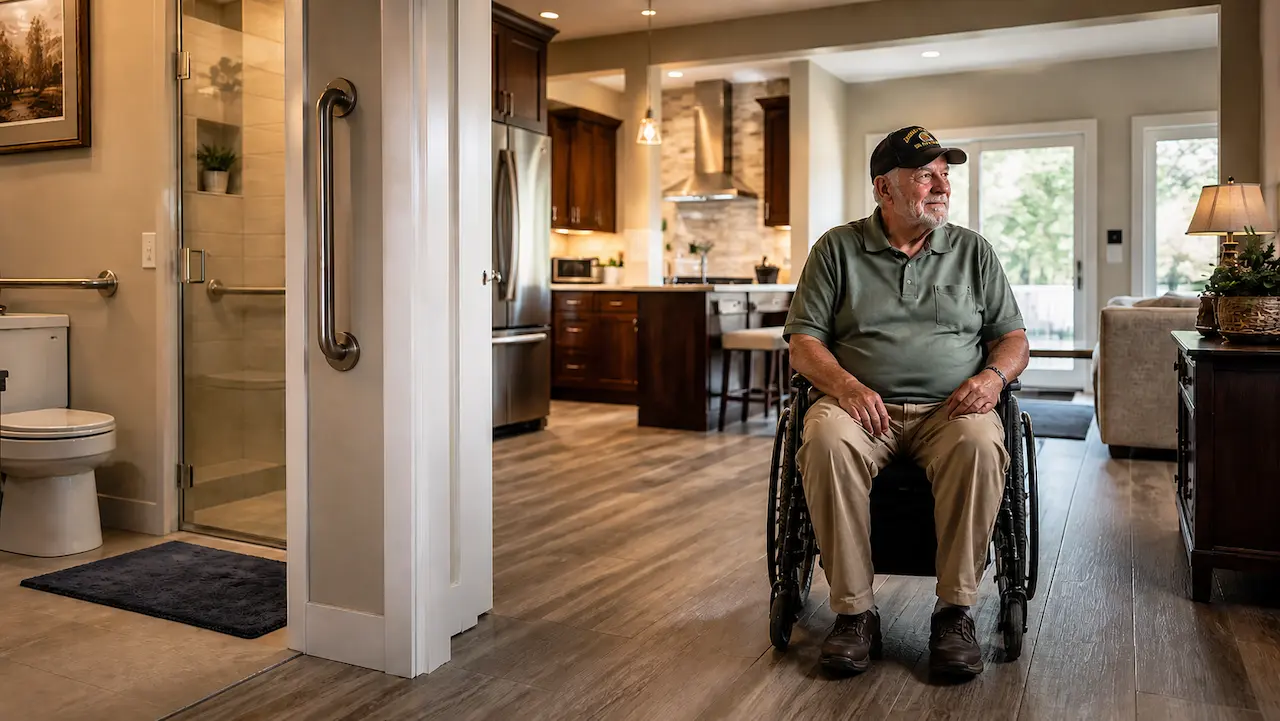
Aging in place is often talked about as a senior living topic, but for veterans, it can mean something much more specific. It is not only about staying in the same house longer. It is about making that home safer, more accessible, and better suited to mobility challenges, service-connected disabilities, and the daily routines that support independence.
For many veterans, standard senior home safety tips are only the beginning. A grab bar here or a brighter light there may help, but some homes need more complete accessibility changes: wider doorways, safer bathrooms, ramps, roll-in showers, accessible kitchens, and layouts that allow a wheelchair, walker, cane, or caregiver to move safely through the space.
That is where aging in place home modifications become important. The right changes can reduce fall risks, make everyday tasks easier, and help veterans remain in a familiar home with more comfort and dignity. At Rhinovations, the focus is on customized VA home adaptations designed around safety, accessibility, comfort, independence, and each veteran’s specific needs.
This guide breaks down the most important home modifications for veterans aging in place, room by room.
What Aging in Place Means for Veterans
Aging in place means being able to live in your own home safely and independently as your needs change. For veterans, that often includes planning around mobility limitations, disability-related barriers, and the long-term use of assistive devices.
A basic aging in place checklist may recommend removing rugs, improving lighting, or adding non-slip mats. Those are useful steps, but veterans with more serious accessibility needs may require structural modifications. A home that worked well years ago may no longer support safe movement from the bedroom to the bathroom, easy entry through the front door, or independent use of the kitchen.
The goal is not to make the home feel clinical. The goal is to make daily life safer without taking away comfort, personality, or independence.
Why Veterans May Need More Than Standard Senior Home Modifications
Many online guides focus broadly on home modifications for seniors. That information can be helpful, but it does not always address the realities of disabled veterans or veterans with service-connected mobility challenges.
A veteran may need:
- A wheelchair-accessible bathroom
- A ramp or step-free entrance
- Wider doorways and hallways
- A roll-in shower
- Lowered countertops
- Accessible kitchen storage
- Safer routes between high-use rooms
- Modifications that align with VA grant requirements
This is why working with a veteran home adaptation specialist matters. Rhinovations describes its VA home adaptation work as tailored to each veteran’s needs, with an emphasis on accessibility, safety, independence, and long-term quality of life.
Safety, Independence, and Dignity at Home
Aging in place is not just about avoiding a move. It is about being able to use your home with confidence.
For a veteran, independence may mean entering the home without help, showering with less risk, preparing meals from a seated position, or moving from room to room without navigating narrow doorways or unsafe thresholds.
Good home modifications should answer one simple question: does this make daily life safer and easier for the veteran who lives here?
Aging in Place Home Modifications Checklist for Veterans
The best aging in place home modifications start with the veteran’s real routine, not with a generic checklist. Before choosing upgrades, look at how the veteran enters the home, moves through the house, uses the bathroom, prepares food, sleeps, and exits in an emergency.
A professional home safety inspection can help identify barriers that are easy to miss. Rhinovations’ process includes an initial consultation to assess the home, understand the veteran’s needs, and outline an adaptation plan. Their process also includes proposal creation, VA-aligned documentation, and final inspection.
Start With Mobility, Medical Needs, and Daily Routines
Every veteran’s situation is different. Some may use a cane or walker. Others may rely on a wheelchair. Some may need help from a caregiver. Others may be mostly independent but at higher risk of falls.
Start by reviewing questions like:
- Can the veteran enter and exit the home safely?
- Are there steps at the front door, garage, or back entrance?
- Is the bathroom safe to use without help?
- Can a wheelchair or walker move through doorways and hallways?
- Are kitchen counters, cabinets, and appliances reachable?
- Is there a safe path from the bedroom to the bathroom at night?
- Are floors, rugs, thresholds, or cords creating trip hazards?
- Would a caregiver have enough room to assist if needed?
This approach keeps the project practical. Instead of modifying everything at once, you focus first on the areas that affect safety and independence the most.
Identify Fall Risks, Narrow Spaces, and Unsafe Transitions
Falls are one of the biggest concerns in aging in place. For veterans with reduced balance, limited strength, prosthetics, vision issues, or mobility devices, small barriers can become serious hazards.
Common risks include:
- Loose rugs
- Slippery bathroom floors
- Poor hallway lighting
- Uneven thresholds
- Steps without secure handrails
- Narrow doorways
- Low toilet height
- Bathtubs that require stepping over a high wall
- Cluttered furniture layouts
- Hard-to-reach switches or storage
Many of these problems can be corrected with thoughtful home modifications. Some are simple fixes. Others require professional remodeling, especially when the home needs to support a wheelchair, walker, or caregiver.
When a Professional Home Safety Inspection Makes Sense
A professional inspection is especially valuable when the veteran is applying for VA-supported home modifications or when the home needs structural changes. A contractor familiar with veteran adaptations can help connect the veteran’s physical needs with practical remodeling solutions.
Rhinovations positions its VA adaptation process around assessing the home, preparing a detailed proposal, following VA guidelines, and completing a final inspection to ensure the work meets the veteran’s needs.
Bathroom Modifications for Veterans Aging in Place
The bathroom is often the most important room to modify first. It is also one of the most dangerous rooms in the home because of water, hard surfaces, tight spaces, and frequent transfers between standing, sitting, and bathing.
For veterans aging in place, a safe bathroom remodel can make a major difference in independence and confidence.
Walk-In and Roll-In Showers
Traditional tubs can be difficult or dangerous for veterans with mobility limitations. Stepping over a tub wall increases the risk of slipping, especially when balance or leg strength is reduced.
Better options may include:
- Walk-in showers
- Roll-in showers
- Curbless showers
- Wider shower entries
- Built-in or fold-down shower seats
- Handheld showerheads
- Easy-reach controls
A roll-in or curbless shower can be especially useful for wheelchair users because it removes the barrier at the shower entrance. The layout should also allow enough room for safe transfers and caregiver assistance if needed.
Grab Bars, Shower Seats, and Non-Slip Flooring
Grab bars should be professionally installed into proper backing, not just attached to drywall. Poorly installed bars can create a false sense of security.
Important bathroom safety upgrades include:
- Grab bars near the toilet
- Grab bars inside and outside the shower
- Non-slip flooring
- Shower seating
- Handheld showerheads
- Anti-scald fixtures
- Better lighting
- Easy-reach storage
These upgrades help reduce risk while keeping the bathroom usable and comfortable.
Accessible Toilets, Sinks, and Safer Bathroom Layouts
Bathroom accessibility is not only about the shower. Veterans may also need:
- Comfort-height toilets
- Space beside the toilet for transfers
- Wall-mounted or wheelchair-accessible sinks
- Lever-style faucets
- Open space below the sink
- Wider bathroom doors
- Clear floor space for turning
A bathroom remodel for aging in place should be planned around how the veteran actually uses the space. A layout that looks good on paper may not work if it does not provide enough room for mobility devices or assistance.
Entryway and Ramp Modifications
Safe entry and exit should be a top priority. If a veteran cannot comfortably get in and out of the home, every other part of the house becomes harder to use.
Entryway modifications may involve ramps, handrails, threshold changes, porch adjustments, improved lighting, or safer exterior pathways.
Step-Free Access for Wheelchairs, Walkers, and Canes
Even one or two steps can become a serious barrier. A step-free entrance can help veterans using wheelchairs, walkers, braces, canes, or prosthetics.
Possible modifications include:
- Exterior ramps
- Threshold ramps
- Platform landings
- Wider entry doors
- Improved porch access
- Safer garage entry
- Slip-resistant exterior surfaces
The best entrance is not always the front door. Sometimes the garage, side door, or back entrance offers a better route for a safe ramp or accessible path.
Ramps, Handrails, Thresholds, and Exterior Pathways
A ramp should be stable, properly sloped, and designed for the veteran’s mobility needs. Handrails, landings, surface texture, drainage, and lighting all matter.
Rhinovations specifically lists entryways and ramps among its home adaptation service areas, along with bathrooms, doorways, hallways, kitchens, bedrooms, and outdoor accessibility.
Why Safe Entry and Exit Matter for Emergency Access
Entry and exit modifications are not only about convenience. They can matter during medical appointments, emergencies, evacuations, and daily transportation.
If emergency responders, caregivers, or family members need to help a veteran leave the home quickly, narrow steps or unsafe thresholds can create delays and risks. A safer entry can improve both independence and emergency readiness.
Doorway and Hallway Modifications
Many older homes were not built with mobility devices in mind. Doorways may be too narrow, hallways may be tight, and turns may be difficult for a wheelchair or walker.
For veterans aging in place, doorway and hallway modifications can make the whole home more usable.
Widening Doorways for Mobility Devices
A wheelchair or walker needs enough clearance to move safely between rooms. Narrow doorways can limit access to bedrooms, bathrooms, kitchens, and living areas.
Doorway modifications may include:
- Widening door frames
- Installing offset hinges
- Removing unnecessary doors
- Replacing swing doors with pocket doors where practical
- Adjusting thresholds
- Creating smoother transitions between rooms
This type of modification can be especially important when the veteran needs full access to the bathroom, bedroom, and main living areas.
Creating Clear Maneuvering Space
Accessibility is not just about doorway width. A veteran also needs room to turn, transfer, and move safely.
Clear maneuvering space may require:
- Rearranging furniture
- Removing obstacles
- Adjusting hallway layouts
- Improving floor transitions
- Creating open paths between high-use rooms
A home should support movement, not force the veteran to work around barriers every day.
Lever Handles, Lighting, and Trip Hazard Reduction
Small details can make daily routines easier. Lever-style door handles are often easier to use than round knobs, especially for veterans with limited grip strength, arthritis, or hand injuries.
Other helpful changes include:
- Brighter hallway lighting
- Motion-sensor lights
- Night lights between bedroom and bathroom
- Removing loose rugs
- Securing cords
- Smoothing uneven flooring
- Marking changes in floor level
These improvements are simple compared with major remodeling, but they can still make the home safer.
Kitchen Modifications for Disabled Veterans
The kitchen is a key part of independence. If a veteran can prepare food, reach supplies, and use appliances safely, daily life becomes easier and more self-directed.
However, standard kitchens often create barriers. Cabinets may be too high, counters may not work from a seated position, and appliances may be difficult to reach.
Lowered Countertops and Accessible Sinks
For wheelchair users or veterans who need to sit while preparing meals, standard counter height may not be practical.
Accessible kitchen modifications may include:
- Lowered countertops
- Open knee space below counters
- Accessible sinks
- Lever-style faucets
- Pull-down shelving
- Side-opening ovens
- Safer appliance placement
The goal is to reduce unnecessary reaching, bending, twisting, and lifting.
Pull-Out Shelving and Reachable Storage
Storage should be easy to reach without climbing, stretching, or losing balance.
Useful upgrades include:
- Pull-out shelves
- Lazy Susans
- Lower cabinet storage
- Drawer-style organizers
- Easy-grip handles
- Frequently used items placed between shoulder and waist height
For veterans with limited mobility, storage design can be the difference between needing help and being able to complete daily tasks independently.
Safer Appliance Placement for Daily Independence
Appliances should be placed where the veteran can use them safely. That may mean adjusting microwave height, creating landing space near the oven, using front-control appliances, or improving lighting around work surfaces.
A kitchen modification should support the veteran’s actual routine: making coffee, preparing meals, cleaning up, reaching medication, or moving between the kitchen and dining area.
Bedroom and Living Area Modifications
Bedrooms and living areas are sometimes overlooked, but they play a major role in aging in place. A safe bedroom layout can reduce nighttime falls, improve caregiver access, and make daily movement easier.
Safer Routes From Bed to Bathroom
The path from bed to bathroom is one of the most important routes in the home. At night, poor lighting, rugs, furniture, and narrow pathways can increase risk.
Helpful modifications include:
- Clear walking paths
- Motion-sensor night lights
- Non-slip flooring
- Bed height adjustments
- Grab bars or transfer supports where appropriate
- Easy access to mobility devices
- Wider bedroom doorways
The goal is to make nighttime movement predictable and safe.
Flooring, Lighting, Furniture Placement, and Emergency Access
Living rooms and bedrooms should have enough open space for walking aids or wheelchairs. Furniture should not create tight turns or blocked pathways.
Consider:
- Removing unnecessary furniture
- Securing rugs or removing them entirely
- Improving lighting near seating areas
- Keeping emergency devices within reach
- Making switches and outlets easier to access
- Creating enough space for caregiver assistance
A home should feel comfortable, not crowded or difficult to navigate.
Making Daily Movement Easier Without Making the Home Feel Clinical
One concern many veterans and families have is that accessibility modifications will make the home look institutional. Good design avoids that.
A well-planned adaptation blends safety with comfort. Grab bars can match bathroom finishes. Ramps can be integrated into exterior design. Wider doorways and open layouts can make the home feel more spacious, not medical.
Rhinovations emphasizes customized renovations that enhance comfort, accessibility, and safety while supporting mobility, independence, and long-term well-being.
Smart Home Technology for Veterans Aging in Place
Smart home technology can support aging in place, especially when paired with structural accessibility improvements. Technology alone does not replace a safe shower, ramp, or accessible doorway, but it can make the home easier to manage.
Motion Lighting, Voice Controls, and Security Features
Helpful smart home upgrades may include:
- Motion-activated lighting
- Voice-controlled lights
- Smart thermostats
- Video doorbells
- Smart locks
- Security cameras
- Automatic door openers
- Water leak sensors
These tools can reduce the need to move unnecessarily, reach switches, or answer the door without knowing who is outside.
Medical Alerts, Cameras, and Remote Access
For veterans living alone, medical alert systems and remote monitoring tools can offer additional peace of mind. Family members or caregivers may be able to check in without being intrusive.
However, technology should be chosen carefully. A device is only useful if the veteran is comfortable using it. The best systems are simple, reliable, and matched to the person’s daily habits.
When Technology Supports but Does Not Replace Structural Accessibility
A smart light can help reduce fall risk, but it will not fix a slippery tub. A video doorbell can improve security, but it will not solve unsafe steps at the entrance.
Technology works best when combined with practical home modifications: safer bathrooms, accessible entrances, clear pathways, and layouts that support mobility.
VA Home Modification Grants and Support Programs
Veterans may have access to VA programs that help pay for certain home modifications. The right program depends on eligibility, disability status, medical need, and the type of modification required.
Because grant rules and funding limits can change, veterans should always verify details directly with the VA or a qualified VA representative.
HISA: Home Improvements and Structural Alterations
The VA’s HISA benefit provides medically necessary improvements and structural alterations to a veteran’s or service member’s primary residence. The VA describes HISA as supporting changes that allow entrance to or exit from the home and improve access to essential lavatory and sanitary facilities, among other medically necessary purposes.
HISA may be relevant for modifications such as:
- Entrance and exit access
- Bathroom accessibility
- Essential sanitary facility access
- Certain medically necessary structural alterations
The VA notes that HISA projects must be medically justified, so documentation matters.
SAH: Specially Adapted Housing Grant
The Specially Adapted Housing grant can help eligible veterans and service members buy, build, or change a permanent home if they meet VA requirements, including having a qualifying service-connected disability. For fiscal year 2026, the VA lists the maximum SAH grant amount as $126,526.
SAH may apply to veterans with certain severe mobility-related disabilities, blindness, severe burns, or other qualifying conditions described by the VA.
SHA: Special Home Adaptation Grant
The Special Home Adaptation grant may help eligible veterans or service members buy, build, or change a permanent home when they or a family member own or will own the home and the veteran has a qualifying service-connected disability. For fiscal year 2026, the VA lists the maximum SHA grant amount as $25,350.
SHA eligibility applies to different qualifying disabilities than SAH, so veterans should review VA requirements carefully.
Why Proper Documentation and Home Assessment Matter
VA-supported home modifications often require clear documentation, a defined scope of work, and alignment between the veteran’s needs and the proposed adaptation.
Rhinovations describes its process as including proposal creation, floor plan preparation, VA-guideline phases, and a final inspection to ensure the work meets VA standards and the veteran’s needs.
That kind of process can be helpful because home adaptation is not just construction. It is planning, documentation, accessibility, safety, and execution.
How to Prioritize Home Modifications for a Veteran
Not every modification has to happen at once. The best approach is to prioritize based on safety, mobility, independence, and budget.
Immediate Safety Needs vs. Long-Term Accessibility
Start with the areas that create the highest risk or the biggest daily barrier.
High-priority areas often include:
- Bathroom safety
- Entry and exit access
- Bedroom-to-bathroom route
- Doorway clearance
- Fall hazards
- Kitchen access
- Emergency exit routes
Long-term planning may include more complete remodeling, additional accessibility features, or modifications that anticipate future mobility changes.
Low-Cost Fixes vs. Professional Remodeling
Some changes are simple and affordable:
- Better lighting
- Removing rugs
- Adding night lights
- Reorganizing storage
- Installing lever handles
- Reducing clutter
Other changes require professional remodeling:
- Roll-in showers
- Widened doorways
- Permanent ramps
- Accessible kitchens
- Structural bathroom modifications
- Flooring changes
- Exterior pathway improvements
The key is knowing when a simple fix is enough and when a professional adaptation is safer.
Planning for Progressive Mobility Changes
A veteran’s needs may change over time. A modification that works today should ideally continue to support the veteran in the future.
For example, a bathroom remodel can be planned with enough space for a wheelchair even if the veteran currently uses a walker. A ramp can be designed for long-term durability. Doorways can be widened before mobility becomes more restricted.
Planning ahead can reduce the need for repeated renovations.
Aging in Place Home Modification Priority Table
| Modification | Best For | Priority Level | Professional Needed? |
| Grab bars | Bathroom stability and transfers | High | Yes, for secure installation |
| Roll-in or walk-in shower | Veterans with mobility limitations | High | Yes |
| Ramp or step-free entry | Wheelchairs, walkers, canes | High | Yes |
| Widened doorways | Wheelchair or walker access | High | Usually yes |
| Non-slip flooring | Fall prevention | High | Sometimes |
| Lever handles | Limited grip strength | Medium | Sometimes |
| Motion lighting | Nighttime safety | Medium | Sometimes |
| Lowered countertops | Seated kitchen use | Medium/High | Yes |
| Pull-out shelving | Easier storage access | Medium | Sometimes |
| Smart home controls | Convenience and security | Medium | Sometimes |
Why Work With a Veteran Home Adaptation Specialist
Aging in place home modifications for veterans require more than a standard remodeling mindset. The contractor needs to understand accessibility, safety, documentation, mobility needs, and the importance of preserving dignity at home.
ADA-Compliant Adaptations Built Around Real Daily Use
ADA-informed design can help make spaces safer and more accessible, but the best results come from adapting the home around the veteran’s actual life.
That means looking at:
- How the veteran enters the home
- Which bathroom is used most
- Whether a wheelchair, walker, or cane is involved
- Whether a caregiver assists
- Which rooms matter most
- How emergency access works
- What VA documentation may be needed
The modification should fit the person, not just the house.
Understanding VA-Aligned Requirements
For veterans seeking VA-supported adaptations, the process may include documentation, inspections, proposals, and compliance with program expectations. Rhinovations states that its process follows VA guidelines through project phases and includes detailed proposal planning and final inspection.
That matters because a poorly planned project can create delays, confusion, or modifications that do not fully solve the veteran’s daily challenges.
How Rhinovations Helps Veterans Adapt Their Homes
Rhinovations specializes in VA home adaptations for veterans across Greater Houston, with services focused on accessibility, safety, comfort, mobility, independence, and long-term well-being. The company lists adaptation areas including bathrooms, entryways and ramps, doorways and hallways, kitchens, bedrooms, and outdoor accessibility.
For veterans who want to stay in their homes, that specialized focus matters. Aging in place should not be reduced to a checklist. It should be a practical plan that helps the veteran move through the home with more safety and confidence.
Final Thoughts: Aging in Place Should Feel Safe, Practical, and Personal
Aging in place home modifications for veterans are about more than remodeling. They are about independence, dignity, comfort, and safety.
The most effective modifications usually start with the highest-impact areas: the bathroom, entryways, ramps, doorways, hallways, kitchen, bedroom, and daily movement paths. From there, veterans and families can decide which upgrades are urgent, which ones support long-term accessibility, and which ones may qualify for VA support.
For veterans, the right home adaptation can make the difference between working around the home and having the home work for them.
FAQs About Aging in Place Home Modifications for Veterans
The most important modifications usually include bathroom safety upgrades, ramps or step-free entrances, widened doorways, non-slip flooring, better lighting, accessible kitchens, and safer routes between the bedroom, bathroom, and main living areas.
Some veterans may qualify for VA programs such as HISA, SAH, or SHA, depending on eligibility, disability status, medical need, and the type of modification. The VA lists SAH and SHA grant information on its disability housing grants page, and HISA information through the VA Prosthetic and Sensory Aids Service.
The best bathroom remodel depends on the veteran’s mobility needs. Common high-impact upgrades include roll-in showers, walk-in showers, grab bars, shower seats, non-slip flooring, accessible sinks, comfort-height toilets, and wider bathroom entryways.
Not always. They are most important when the veteran uses a wheelchair, walker, cane, prosthetic, or has difficulty with steps or narrow spaces. A professional home assessment can help determine whether these modifications are needed.
A veteran should consider a home safety inspection when mobility becomes difficult, after a medical diagnosis or injury, before applying for VA-supported modifications, or when planning to remain in the home long term.
Regular senior home modifications often focus on general fall prevention and comfort. Veteran home adaptations may need to address service-connected disabilities, wheelchair access, structural remodeling, VA grant requirements, and long-term independence.